While garage doors are designed to be sturdy, they can still sustain damage. Garage doors are expensive, so, understandably, homeowners may want to address specific damage rather than replace the whole door. This is a viable option in many cases, but not all.
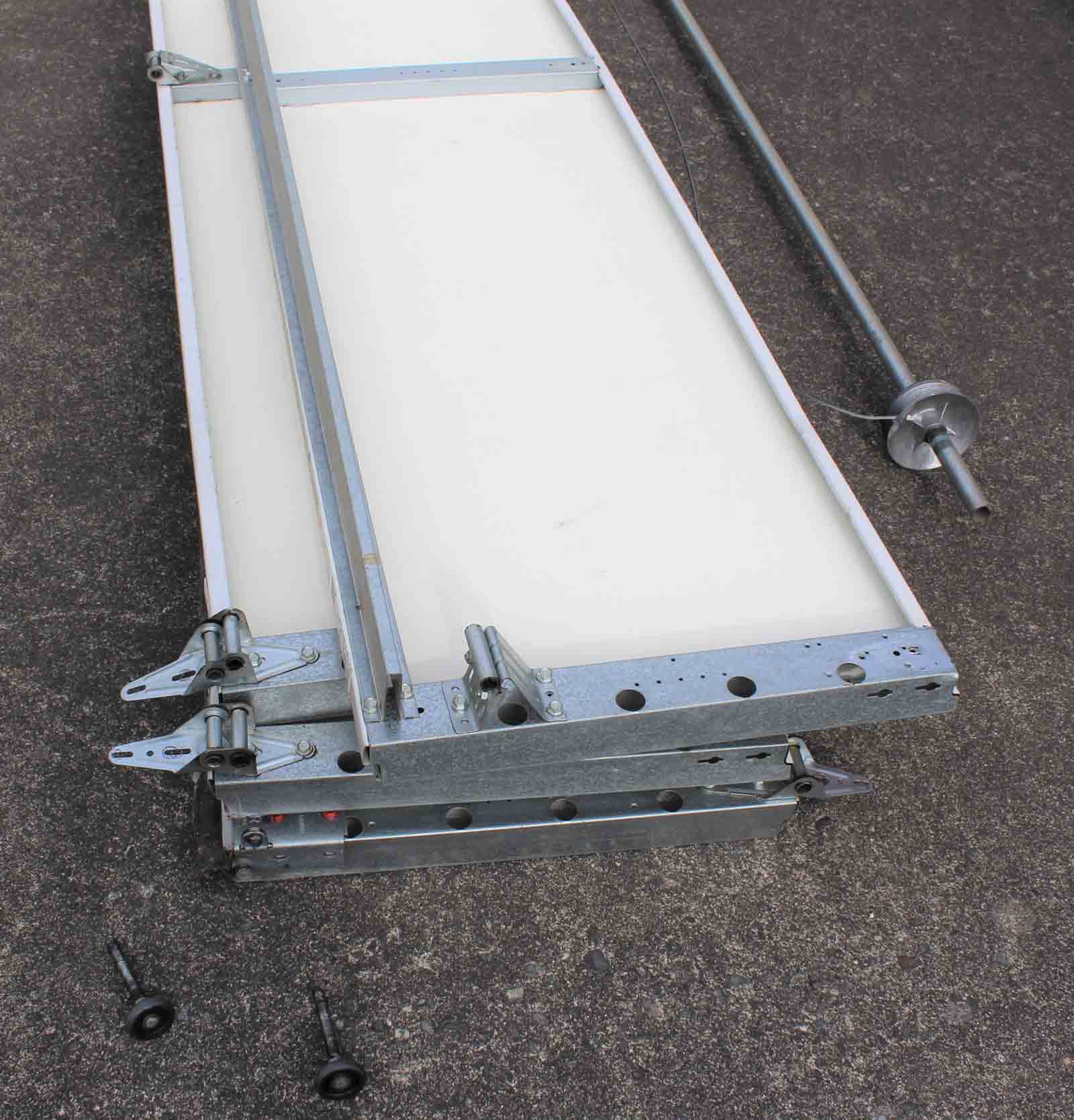
Cosmetic vs. Structural Damage
Accidents happen. Maybe your teenager accidentally backs into your garage door, or a windstorm slams a branch into a panel. Whatever the situation, you’ll need to decide what to do about any dents, dings, or other damage.
Sometimes, you don’t need to do anything right away unless you want to. If the damage is purely cosmetic, doesn’t bother you too much to look at, and won’t immediately lead to further damage if left untreated, you can leave it alone until you’re ready to deal with it. If, on the other hand, the damage affects the door’s structure or safety, it’s best to address it as soon as possible.
That said, even if the damage is “fine for now,” you should still fix it sooner rather than later. Scratches, chips, dings, and dents often lead to further issues if left untreated. From rust formation to additional paint or surface-layer degradation, damage will likely escalate without intervention.
The Dangers of Damage
Garage doors need to be balanced and aligned to function properly. Otherwise, the whole mechanism is put under strain, and a single issue can snowball into a whole system failure due to bent tracks, a straining motor, or a failure to open or close safely.
Problems with your garage door can also pose other hazards. You may not be able to secure or even close a damaged, malfunctioning, or misaligned door, which can give outsiders access to your garage contents. If you have an attached garage, a compromised door can also provide unintentional access to your home.
If your garage door doesn’t sit squarely on the ground to form a good seal, or if a section is punctured or missing, water or debris can easily enter. For temperature-controlled or attached garages, these issues also affect the internal environment, potentially leading to higher energy costs.
Long story short: you shouldn’t ignore structural garage door damage. Addressing it promptly is critical to ensure the safety of your garage door system and your home,
Determining Damage Severity
Sometimes, it’s easy to tell that garage door damage is severe enough to warrant attention. If the door is clearly askew or a panel or window is punctured or missing, it’s best to call your garage door contractor to have it fixed.
Less obvious damage, however, can be harder to assess. When is a dent big enough to impact the door’s structure or balance? Does a small crack or slight misalignment necessitate attention?
As a general rule, if you’re worried about it, call a pro. Even if it turns out that the damage is only cosmetic, you’ll have peace of mind knowing that you’ve done your due diligence regarding garage door care. If you want to do some sleuthing on your own before calling in the experts, though, you absolutely can.
DIY Garage Door Damage Assessments
- Proper function: while opening and closing the door, listen and watch attentively. If the door jerks, shudders, or sticks, or if you hear grinding, squealing, or popping sounds, you’re likely dealing with structural damage.
- Correct alignment: close the door and look at it from the outside. All sections and panels should look evenly spaced. If one section is askew or looks curved or slanted, it’s time to call in the experts.
- Physical stability: gently push on and around the damaged site. If it feels weak or moves under your hand, the damage is more than cosmetic.
- Seal integrity: standing inside the garage, look at where the door meets the frame and the ground. If you can see light or signs of moisture, or if you feel drafts, the door isn’t sealing properly. It’s time to call a contractor for professional assistance.
If any of these tests are positive, your door likely has structural damage that you should fix as soon as possible. On the other hand, if these tests are negative, you can continue using your door and address any cosmetic damage when you’re ready.
Garage Door Replacement Options
If your garage door is severely damaged, you may need to replace the whole thing even if it only looks like one section is faulty. Your garage door contractor will be able to assess the extent of any damage and advise if a full replacement is necessary.
Sometimes, a full replacement is not needed—you may be able to replace just the affected panel(s). The viability of this option depends on a number of factors, including:
- The degree of damage (both the severity and how much of the door is affected)
- The age of the door
- The availability of replacement panels
If replacement panels are simply not available, you will probably need to replace the whole door. While this is unfortunate, it’s better than having an unsafe or malfunctioning door.
The other major consideration is cost. How much is the cost of a panel vs. a whole door replacement? Is it significantly cheaper to do a panel replacement (including materials and labor)? Or is the cost relatively close?
Additionally, consider the age of your garage door. Is it worth it to replace one panel on an older door that has (or could soon have) other mechanical or structural problems? Or would it be more cost-effective to replace the entire door now and avoid more extensive repair or upkeep costs in the future?
Every situation is different, so there’s no one-size-fits-all solution. The key thing to remember is that you do have options. It’s always worth inquiring if a panel replacement is possible, while also keeping in mind that a full replacement might be the best financial choice in the long run.
For help with garage door damage in Heathsville and the region, call Easy Open Garage Doors, LLC, today. With 32 years of experience installing and servicing garage doors, our team is ready to assist with all your garage door needs. We’re proud to offer reliable, courteous service, including 24/7 emergency assistance. Easy Open Garage Doors, LLC—Because Life Is Hard Enough!